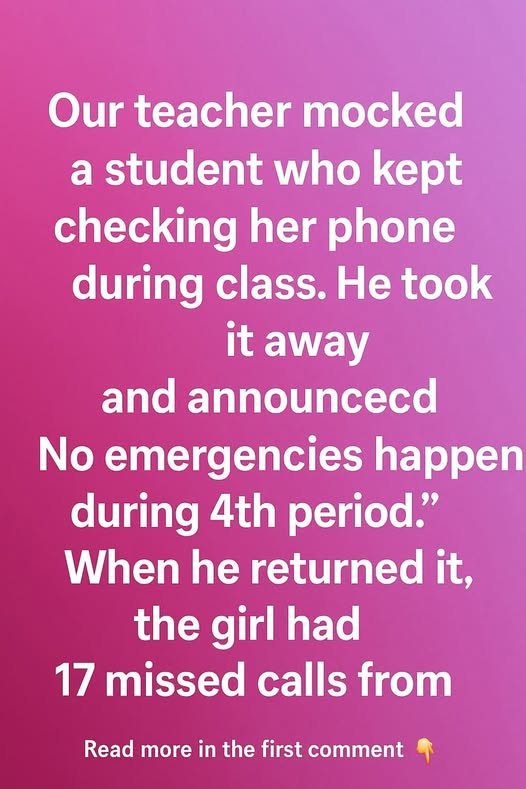
It was a standard attempt at classroom management. A student was visibly distracted by her phone, and our teacher, following protocol, decided to make an example of it. With a witty remark about the non-existence of fourth-period emergencies, he confiscated the device. The class laughed along, a shared moment of minor rebellion being politely squashed. The phone rested on the teacher’s desk, a small monument to enforced focus, and we moved on with the day’s lesson, the incident already fading.
The fading stopped when the bell rang. As the girl took her phone back, the screen illuminated to reveal a log that made everyone’s breath catch: row after row of the same unknown number. The earlier laughter died in our throats. Her reaction was a masterclass in contained panic—a pale face, steady hands, and a voice so quiet it was almost a whisper asking to leave. The teacher, sensing the seismic shift in the room’s energy, mutely nodded. Her departure left behind a silence so thick it felt like a third presence in the room.
The pieces fell into place through the solemn visit of an administrator and the fragments of information that trickled out later. There had been an emergency. A loved one was in the hospital. Those seventeen calls were the frantic attempts of a family trying to reach her. The teacher’s certainty had collided with a harsh, unpredictable reality. When he addressed us the next morning, he did not lecture. He apologized. He spoke about the humility required to lead and the critical need to leave space for the unseen battles people carry.
That apology was a turning point. It reframed authority not as inflexible rule, but as guided understanding. We learned that discipline without compassion is merely control, and that being right is far less important than being kind. The girl’s personal crisis became our collective lesson in humanity, one that extended far beyond the classroom walls.
To this day, that memory serves as a powerful corrective to my own judgments. When I see someone disengaged or breaking a small rule, I remember the seventeen missed calls and the teacher who had the courage to say he was wrong. It taught me that empathy is not a soft skill, but a vital one—a lens through which we should always first view the actions of others, knowing we rarely have the full story.